Gestational Diabetes Diet & Meal Plan — What I Wish I'd Known
An honest, lived-experience guide to gestational diabetes symptoms, diet and meals that actually worked
I was diagnosed with gestational diabetes (GD) at around 28 weeks. The passing threshold for my glucose tolerance test was 7.0mmol/L (126mg/dL) or below — I came in at 13mmol/L (234mg/dL). Not borderline. Not close. A lot to manage, fast.
What followed was months of finger pricks, food anxiety, metformin side effects I wouldn't wish on anyone, and eventually giving birth at 34 weeks and 6 days — the very day I was due to start insulin. The insulin was already in my fridge.
I also later learned that my GD wasn't just a pregnancy complication. It revealed a long-standing issue with my blood sugars. I'm now Type 2 diabetic, just slightly over the threshold, and I also have PCOS with high androgens (no cysts). None of this was on my radar before pregnancy.
This post isn't here to scare you. It's the honest gestational diabetes diet and meal plan I wish someone had given me — symptoms to watch for, the metformin reality, the foods that spiked me, and the meals that kept my numbers in range without making me feel punished.
Gestational diabetes symptoms — what I noticed (and what I missed)
One of the hardest things about gestational diabetes symptoms is that most of them overlap with normal pregnancy. Tiredness, thirst, needing the loo more often — that's just pregnancy, right? Not always. Looking back, the signs were there for me, I just didn't know to pay attention to them.
The most common gestational diabetes symptoms include:
- Increased thirst, beyond normal pregnancy thirst
- Needing to urinate more than feels normal, even for pregnancy
- Fatigue that feels heavier than usual
- Dry mouth
- Recurrent thrush or UTIs
- Blurred vision
- Sugar cravings that feel relentless
But here's the honest truth: many women with GD have no obvious symptoms at all. I didn't feel especially unwell when I was diagnosed at 13mmol. That's why testing matters more than waiting for symptoms — by the time you "feel" gestational diabetes, your levels have usually been high for a while.
First things first — get your bloods checked early
My biggest piece of advice: ask for a blood glucose test as soon as you know you're pregnant, especially if you have any of the following risk factors:
- PCOS (with or without cysts)
- Family history of diabetes
- BMI over 30
- Previous large baby
- Previous gestational diabetes
- South Asian, Black, Middle Eastern or mixed heritage background
Don't wait for the routine 24–28 week glucose tolerance test if you have risk factors. Catching gestational diabetes early gives you so much more time to manage it through diet before medication becomes necessary — and it might flag a long-term sugar issue you had no idea about, as it did for me.
On metformin — the reality nobody warns you about
I started on a low dose and worked up to 2,000mg daily. The side effects were significant. If you've searched pregnancy farts or pregnancy gas smell in a panic at 2am, this section is for you:
- The wind. Pregnancy already does things to your digestive system. Metformin adds another layer. Mix pregnancy farts with metformin farts and it is a concoction to gas a whole room. I spent a lot of time in the bedroom alone so I could freely release without subjecting my partner to it. You are not imagining it — and you are definitely not alone.
- The diarrhea. Persistent, unpredictable and at times genuinely debilitating. It never truly went away for me.
If you're struggling, tell your midwife. There are slow-release versions of metformin that can be significantly kinder on your digestive system. You don't have to just push through it.
The gestational diabetes diet reality — what actually worked for me
Here's the thing nobody tells you clearly enough: everyone's body responds differently. What spiked me might be fine for you. You have to become a bit of a scientist about your own body.
Below I'm sharing actual screenshots of the readings I sent to my midwives, so you can see real numbers, not theory. Please note: my diet was not vegetarian friendly. Protein was my anchor through GD.
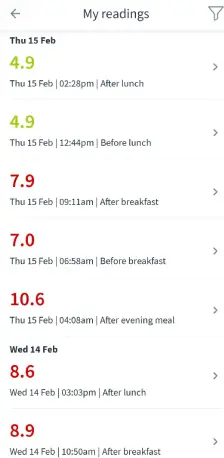
I went from this
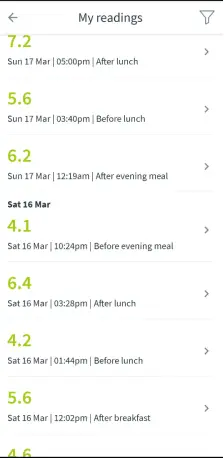
To this — with medication too, but also diet. Everyone is different.
The golden rules of my gestational diabetes diet
Protein is your best friend. It slows the absorption of carbohydrates and keeps your levels stable. Pair everything with protein where you can.
And broccoli is magic. Eating broccoli before or alongside a carb-heavy meal genuinely helped buffer my blood sugar response. It sounds odd but it works.
Foods that surprised me by spiking my levels
These are the ones that caught me out — worth knowing before you start, so you can test rather than assume:
- Wholegrain — often marketed as the "healthy" choice for blood sugar. It consistently spiked me.
- Sugar free chocolate spread — a huge spike. Sugar free does NOT mean blood sugar friendly.
- Low sugar digestive biscuits — one of my highest readings. Always check the carbohydrate content, not just the sugar label.
- Wholegrain tortillas and bread — I assumed these were safe. They weren't for me.
- Bananas — I had no idea. They are awful for blood sugar with GD. Cut them out early.
- Sausages — surprisingly spiked me too. The fillers and rusk content seem to make a real difference despite the protein.
- Dahi baingan and wholegrain tortillas — I thought these were healthy choices. Both spiked me significantly.
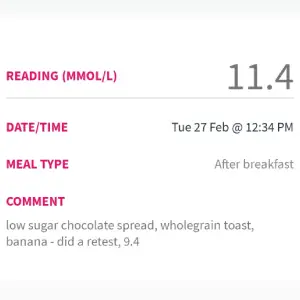
9.4mmol/L = 169mg/dL — low sugar spread.
My gestational diabetes meal plan — meals that actually worked
If you're looking for a real-world gestational diabetes meal plan that doesn't read like a hospital leaflet, this is mine. Numbers are from pricking 1–2 hours after eating.
Sweet potato fries
Roasted with Mexican seasoning, low fat mayonnaise on the side. A genuinely satisfying meal that didn't spike me — I ate them most days, often alongside something that would spike me, to pad the meal out and buffer the response.
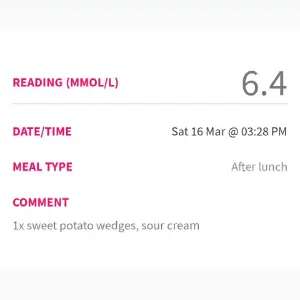
6.4mmol/L = 114mg/dL
Chinese hot pot
This was genuinely amazing for my GD — my numbers would often come in lower after this than before. If you don't have a hot pot machine, I'd seriously suggest getting one. What I used:
- Pork, beef or lamb
- Pak choy
- Egg noodles (they smell awful raw — the taste is fine, I promise)
- Dried shiitake mushrooms
- Enoki mushrooms
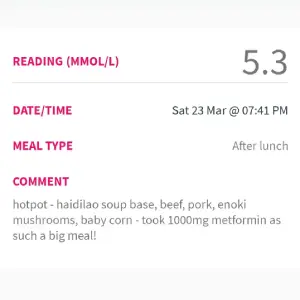
5.3mmol/L = 95.41mg/dL
Loaded potato skins
Cheese, spinach, ham and/or bacon, cream cheese. One of my favourite meals during pregnancy and a brilliant GD-friendly option.
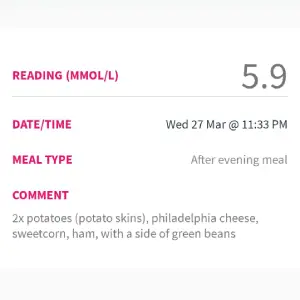
5.9mmol/L = 106mg/dL
The broccoli chip trick
How I could still eat chips: tenderstem or normal broccoli, chicken with low sugar hot sauce, and a side of chips. The protein and veg buffer the chips enough to keep levels stable. If you're in the UK, Nandos works brilliantly — plain chicken with broccoli and chips was a regular for me.
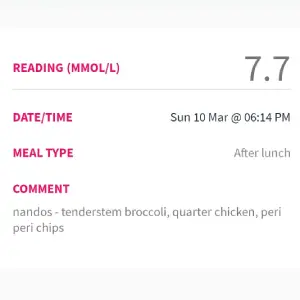
7.7mmol/L = 139mg/dL
Microwaved and fried potato
One Maris Piper potato, microwaved for 5 minutes, then fried up and served with a fried egg. Quick, filling, protein-padded and it worked for my levels.
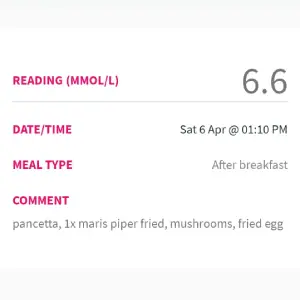
6.6mmol/L = 119mg/dL
Kebab — yes really
Protein is your friend, so if you want a kebab you can still have one. Balance it with plenty of salad and vegetables. No bread, no chips — just meat, red cabbage, garlic sauce and a little chilli sauce. The protein does the work.
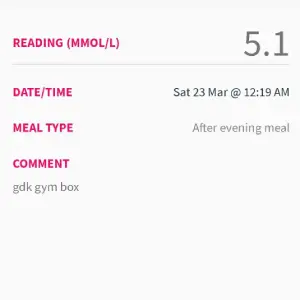
5.1mmol/L = 92mg/dL — German Doner Kebab. No bread or chips, just red cabbage, meat, garlic sauce and a little chilli sauce.
McDonald's without the top bun
I loved a chicken bacon mayo. I'd order it without the top bun — the bottom bun was enough to scratch the itch without the full carb load. Small hacks matter on a GD diet.
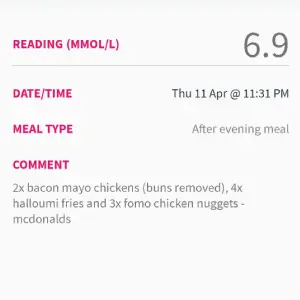
6.9mmol/L = 125mg/dL
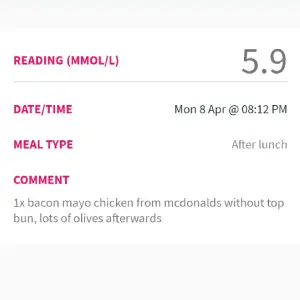
5.7mmol/L = 103mg/dL
Gluten free wraps
The M&S gluten free chicken wrap was a regular for me. Wheat and gluten free options are often lower in the carbohydrates that spike blood sugar — worth keeping in the fridge.
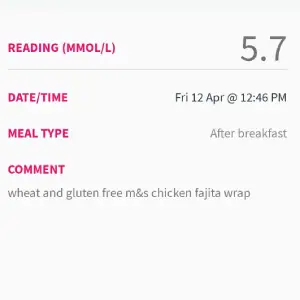
5.7mmol/L = 103mg/dL
Chicken wings
If I ever wanted a truly low result, chicken wings with sugar free sauce or spices were my go-to. If you've had a tough day with your numbers, finish with chicken wings to bring them back down.
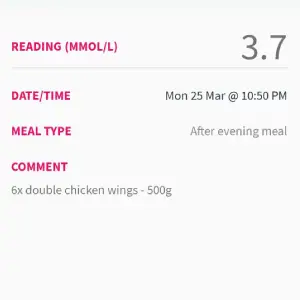
3.7mmol/L = 67mg/dL
Ribs and cheesy leeks
I could eat my bodyweight in cheesy leeks. Paired with dry rubbed ribs (no sauce — sauces are usually full of sugar), this was comforting, protein-rich and great for my numbers.
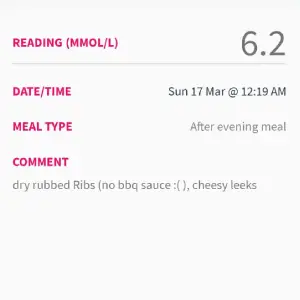
6.2mmol/L = 112mg/dL
Chilli
Full of protein, padded with vegetables and served alongside sweet potato fries. Flavourful and satisfying — a regular in my GD rotation.
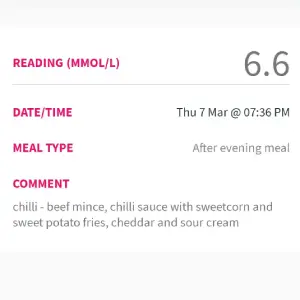
6.6mmol/L = 119mg/dL
Packet noodles — with a swap
Replace the wheat noodles with egg noodles. Wheat is the enemy here and you have to fight strategically. Our choice is Shin Ramyun — full of spice and flavour, paired with any protein: boiled egg, ham, chicken. A classic base that works every time.
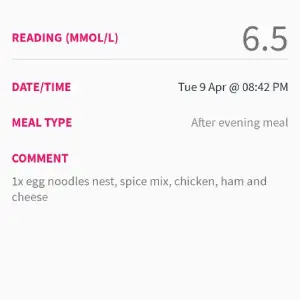
6.5mmol/L = 117mg/dL
Give yourself grace
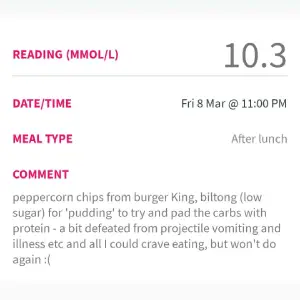
10.3mmol/L = 186mg/dL — I had morning sickness all through my pregnancy and it never lifted. I had a cold on top of it and I cheated. I felt guilty for so long. But I'm writing this listening to my healthy two year old talk to herself, blow kisses and say "see you laterrr" — and all I'm doing now is kicking myself for kicking myself.
Not being able to eat your cravings is genuinely one of the worst parts of a gestational diabetes diet. A few times, I cheated. I'm not proud of it, but it happens — and if it happens to you, give yourself grace.
As long as it's not a daily occurrence, you're human. One slip doesn't define your management. Get back on track at the next meal. The damage of persistent poor management is cumulative, not instant. One bad reading won't hurt your baby. Chronic unmanaged levels might.
Be honest with your midwife. They're there to help, not to judge.
A note on PCOS and gestational diabetes
If you have PCOS, your risk of gestational diabetes is significantly higher due to insulin resistance — and that includes the high androgen, no cysts form that I have. PCOS isn't always the textbook picture.
Make sure your midwife knows and push for early testing. The two conditions are closely linked and managing one often helps manage the other.
My final advice on managing gestational diabetes
- Know the symptoms — but don't wait for them
- Get tested early, especially with risk factors
- Protein with everything
- Eat broccoli before carbs where you can
- Don't trust "sugar free" or "wholegrain" without testing your own response
- Bananas, sausages, low sugar biscuits — test before trusting
- Track everything — the patterns will become clear
- Give yourself grace when you need it
- Tell your midwife everything — they cannot help you if they don't know
You will get through this. Gestational diabetes is hard and relentless and the finger pricks get old fast. But it's manageable, and the women who've been through it are tougher for it.
Written from personal experience. Always consult your midwife or healthcare provider for medical advice specific to your pregnancy.
Cart
Find Your Scent
Answer four quick questions and we'll match you to the balm that fits your pregnancy right now.